
Loop Pattern Fingerprint
Loop Pattern Fingerprint - Web if the pattern has one delta then it is a loop and if it has more than one delta it is a whorl. There is always one delta present in the loop pattern type. This bone is located on the same side of the hand as the little finger, and this pattern flows from the thumb to the little finger. 5 rules and 4 types with images. You will notice in the image at right (plain arch) that there is no delta and no significant core. The fingerprint modality, which has numerous characteristics including universality, distinctiveness, permanence, collectability, better matching performance and acceptability, is widely. Core is placed on innermost recurve. Web the most common types of fingerprint pattern are arch, loop, and whorl (figure 1a). Combine the meanings of the fingers to the print. Loop is divided into three parts; The ring (apollo) is where we see our sense of style, charisma and. Loop is divided into three parts; Web arches are characterised by ridges that flow from one side to the other without making a backward turn, loops involve ridges that recurve back toward the origin, and whorls exhibit circular or spiral patterns. Web fingerprint patterns called loops (simple loops) characterized by one triradius (or delta) and one core are very common in most of the human populations. Core is placed at the center for equidistant shoulders. Divided into radial loops (pointing toward the radius bone, or thumb) and ulnar loops (pointing toward the ulna bone, or pinky), loops account for approximately 60 percent of pattern types. A loop is formed when one or more ridges entering from the same side recurving, existing form the same side. Web by altering the relative timing, location and angle of these starting points, the team could create each of the three most common fingerprint patterns — arches, loops and whorls — and even. Although the basic whorl, arch, and loop patterns may be similar, the details of the patterns are specific to each individual. The middle (saturn) shows our boundaries, seriousness and responsibilities. The team assessed dna from their volunteers to find the genetic basis of. What sets them apart is the presence of a loop pattern that encapsulates a central dot or circular feature. Divided into radial loops (pointing toward the radius bone, or thumb) and ulnar loops (pointing toward the ulna bone, or pinky), loops account for approximately 60 percent of. Web by altering the relative timing, location and angle of these starting points, the team could create each of the three most common fingerprint patterns — arches, loops and whorls — and even. Combine the meanings of the fingers to the print. Moreover, for some human groups they represent the most frequent patterns of. Sir francis galton has described 3. A loop is formed when one or more ridges entering from the same side recurving, existing form the same side. Look at your own fingerprint patterns and see if you have any loops. Ulnar loop are created when fingerprint ridges turn backward but do not twist completely around. Web if the pattern has one delta then it is a loop. Web if the pattern has one delta then it is a loop and if it has more than one delta it is a whorl. They originate from one side of the finger, curve around or upward, before exiting out the other side. Web the loop fingerprint. Web arches are characterised by ridges that flow from one side to the other. Loop is divided into three parts; Web loop, whorl & arch pattern examples. These are named after the ulna, a bone located in the forearm. Web fingerprint patterns called loops (simple loops) characterized by one triradius (or delta) and one core are very common in most of the human populations. The fingerprint modality, which has numerous characteristics including universality, distinctiveness,. Web arches are characterised by ridges that flow from one side to the other without making a backward turn, loops involve ridges that recurve back toward the origin, and whorls exhibit circular or spiral patterns. Edward henry modified galton’s system and described 4 basic patterns for classifications which are used normally are as follows: These ridges are also present on. Although the basic whorl, arch, and loop patterns may be similar, the details of the patterns are specific to each individual. The fingerprint modality, which has numerous characteristics including universality, distinctiveness, permanence, collectability, better matching performance and acceptability, is widely. Look at your own fingerprint patterns and see if you have any loops. If you see loops, count how many. Sir francis galton has described 3 patterns for classification of fingerprints: These are named after the ulna, a bone located in the forearm. You will notice in the image at right (plain arch) that there is no delta and no significant core. Mostly, an ulnar loop moves toward the little finger. Look at your own fingerprint patterns and see if. Look at your own fingerprint patterns and see if you have any loops. Web loop, whorl & arch pattern examples. A loop pattern always comprises one delta, which is roughly a triangular formation in the pattern. These are named after the ulna, a bone located in the forearm. Ridges flow from one side to other without making any curve. A loop always has a core and a delta. Because there is no delta this pattern, by default, has to be an arch. If the device is restarted by the user or automatically Web central pocket loop fingerprints offer a distinct and intriguing variation in fingerprint patterns. Web fingerprint patterns called loops (simple loops) characterized by one triradius (or delta). A loop is formed when one or more ridges entering from the same side recurving, existing form the same side. You will notice in the image at right (plain arch) that there is no delta and no significant core. Web a person’s fingerprints are based on the patterns of skin ridges (called dermatoglyphs) on the pads of the fingers. Web if you set the screen lock type by biometrics recognition such as fingerprints or face recognition, the screen that requests a pin, pattern, or password may appear instead of fingerprints or face recognition in the below cases, according to the policy of android os: Ulnar loop are created when fingerprint ridges turn backward but do not twist completely around. If the device is restarted by the user or automatically Divided into radial loops (pointing toward the radius bone, or thumb) and ulnar loops (pointing toward the ulna bone, or pinky), loops account for approximately 60 percent of pattern types. Web central pocket loop fingerprints offer a distinct and intriguing variation in fingerprint patterns. The fingerprint modality, which has numerous characteristics including universality, distinctiveness, permanence, collectability, better matching performance and acceptability, is widely. Web a chart illustrating fingerprint ridge patterns (arches, loops and whorls) and fingerprint ridge characteristics (core, ending ridge, short ridge, fork or bifurcation, delta, hook, eye, dot or island, crossover, bridge, enclosures, and speciality). A fingerprint pattern type where the ridges enter from one side, curve up and around and flow back out the side it entered. Web types of loop patterns. Ulnar loop, radial loop, and central pocket loop. Loops make up almost 70 percent of fingerprint patterns. The middle (saturn) shows our boundaries, seriousness and responsibilities. The team assessed dna from their volunteers to find the genetic basis of.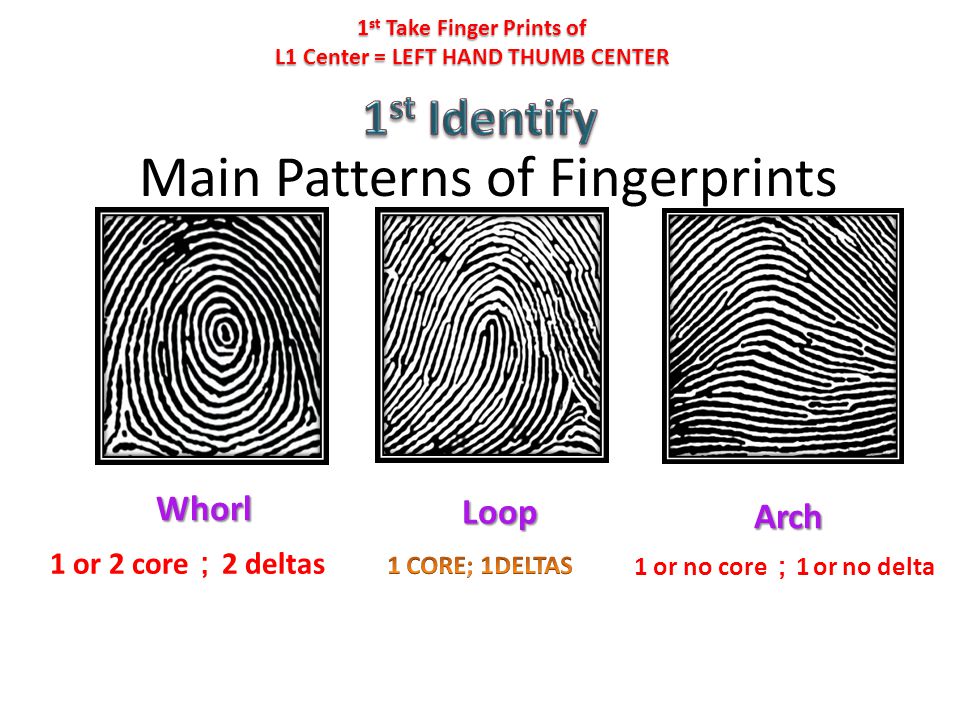
Loop Fingerprints
Forensic Training Unlimited LoopsFingerprint Pattern
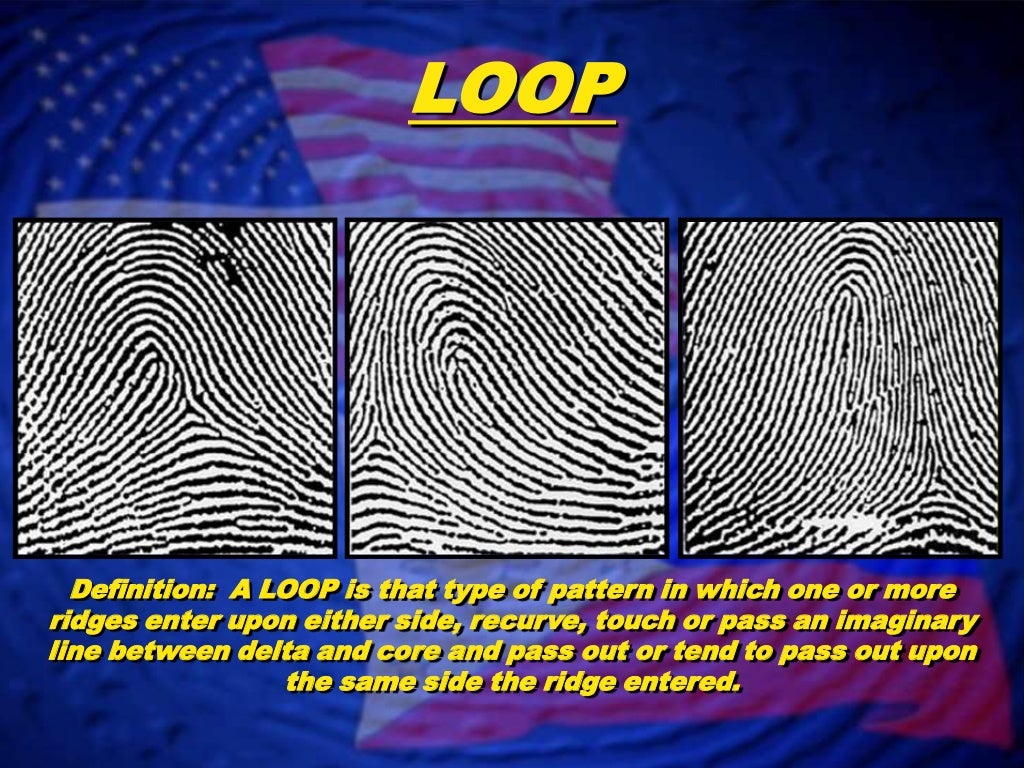
Fingerprint Classification Loop Patterns
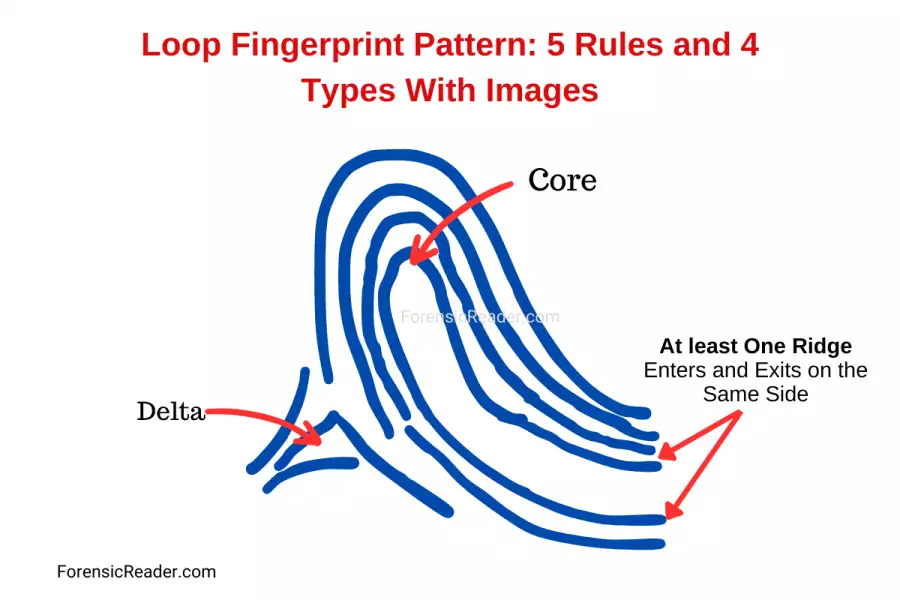
Loop Fingerprint Pattern 5 Rules and 4 Types With Images
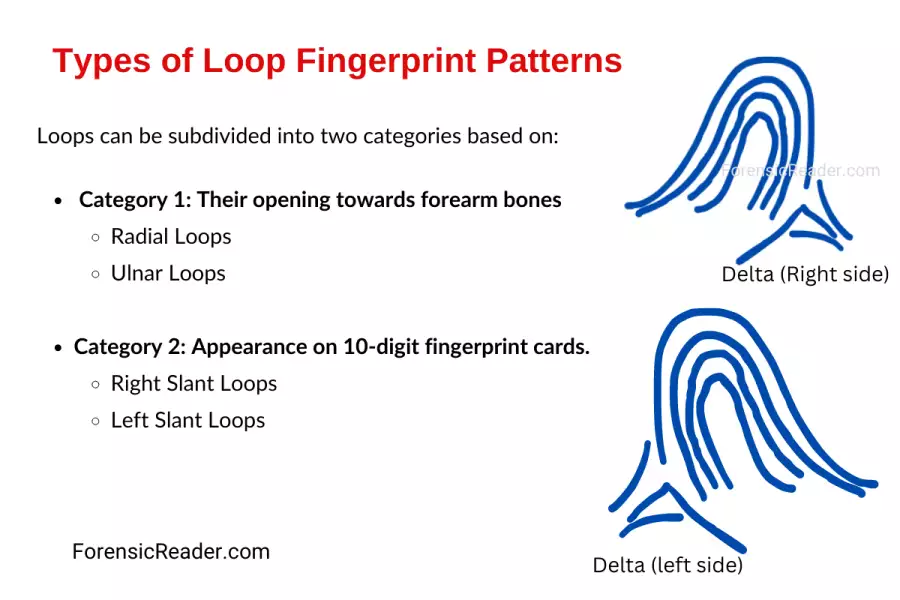
Loop Fingerprint Pattern 5 Rules and 4 Types With Images

The Loop Deciphering Your Own Fingerprints American Academy of Hand
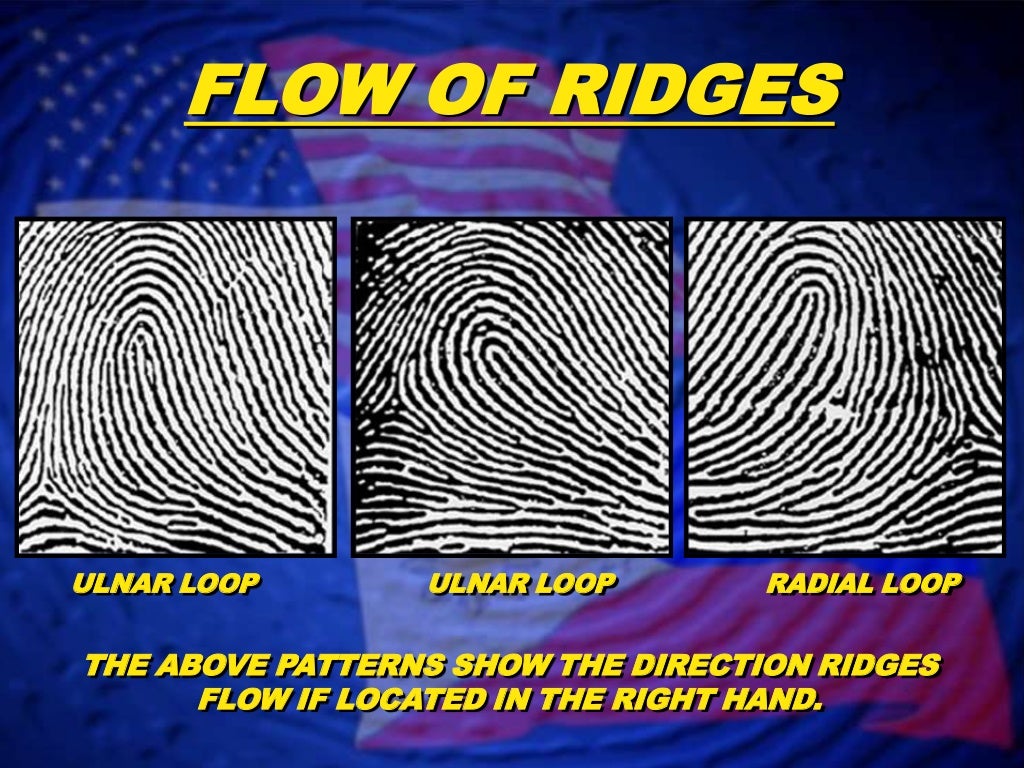
Fingerprint Classification Loop Patterns

3 Basic patterns of fingerprints(a) Ulnar Loop (b) Radial Loop (c
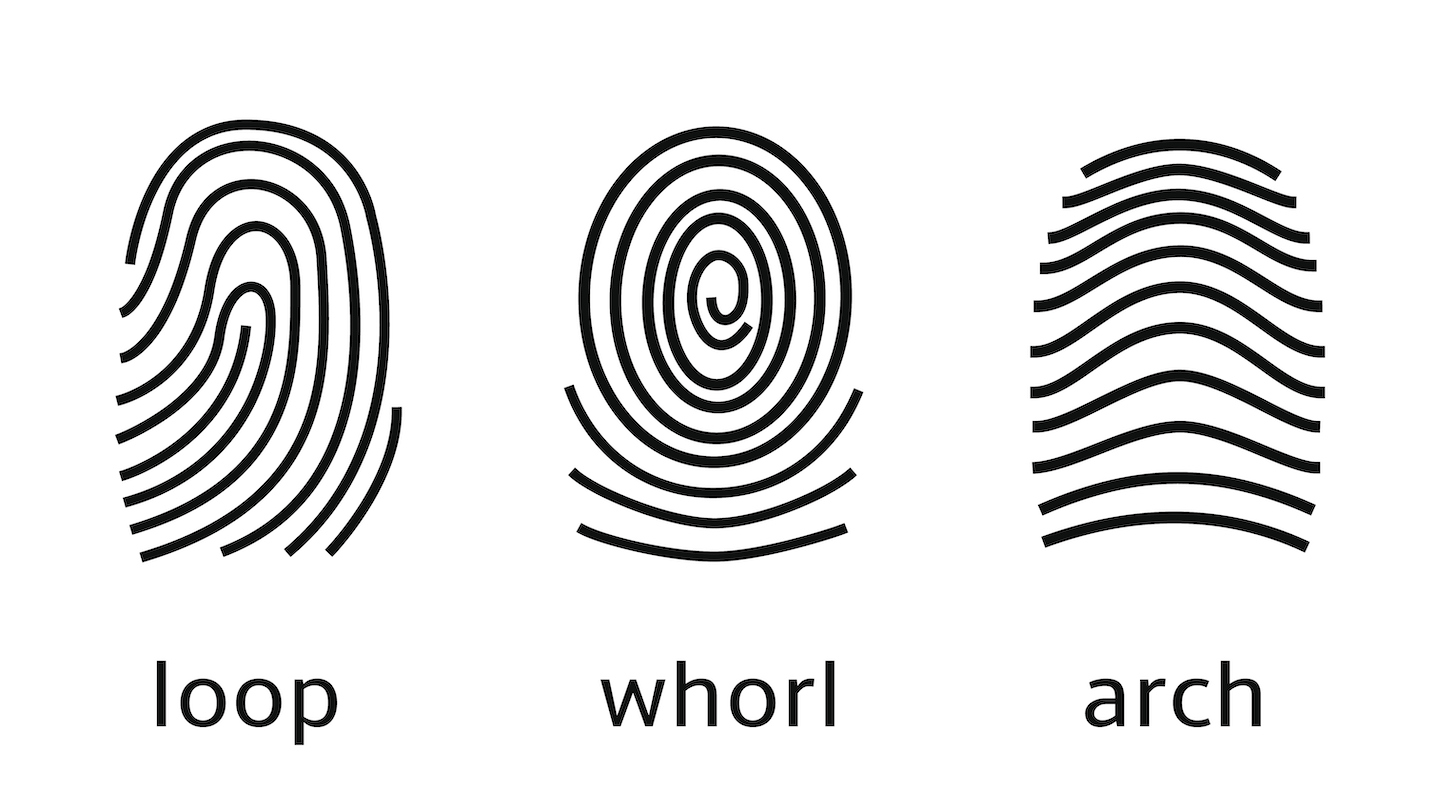
Experiment Are fingerprint patterns inherited?
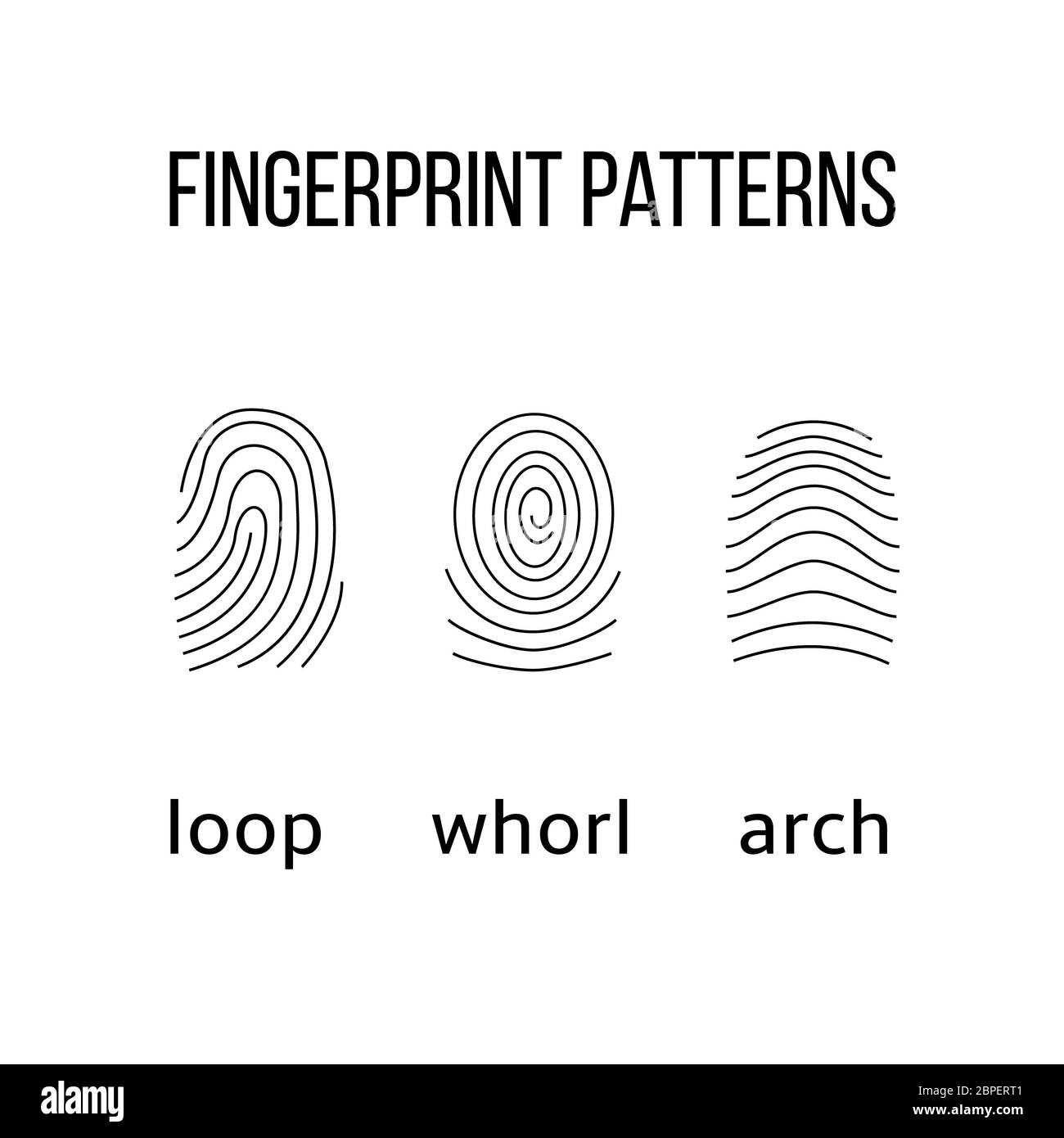
Three fingerprint types on white background. Loop, whorl, arch patterns
Web A Loop Is That Type Of Fingerprint Pattern In Which One Or More Of The Ridges Enter On Either Side Of The Impression, Recurve, Touch Or Pass An Imaginary Line Drawn From The Delta To The Core, And Terminate Or Tend To Terminate On Or Toward The Same Side Of The Impression From Whence Such Ridge Or Ridges Entered.
Sir Francis Galton Has Described 3 Patterns For Classification Of Fingerprints:
Divided Into Radial Loops (Pointing Toward The Radius Bone, Or Thumb) And Ulnar Loops (Pointing Toward The Ulna Bone, Or Pinky), Loops Account For Approximately 60 Percent Of Pattern Types.
Because There Is No Delta This Pattern, By Default, Has To Be An Arch.
Related Post: